Triple Match City
- 4.8
- Rating
- 5.00M
- Installs
- Free
- Price

 Analysis by App-foxy
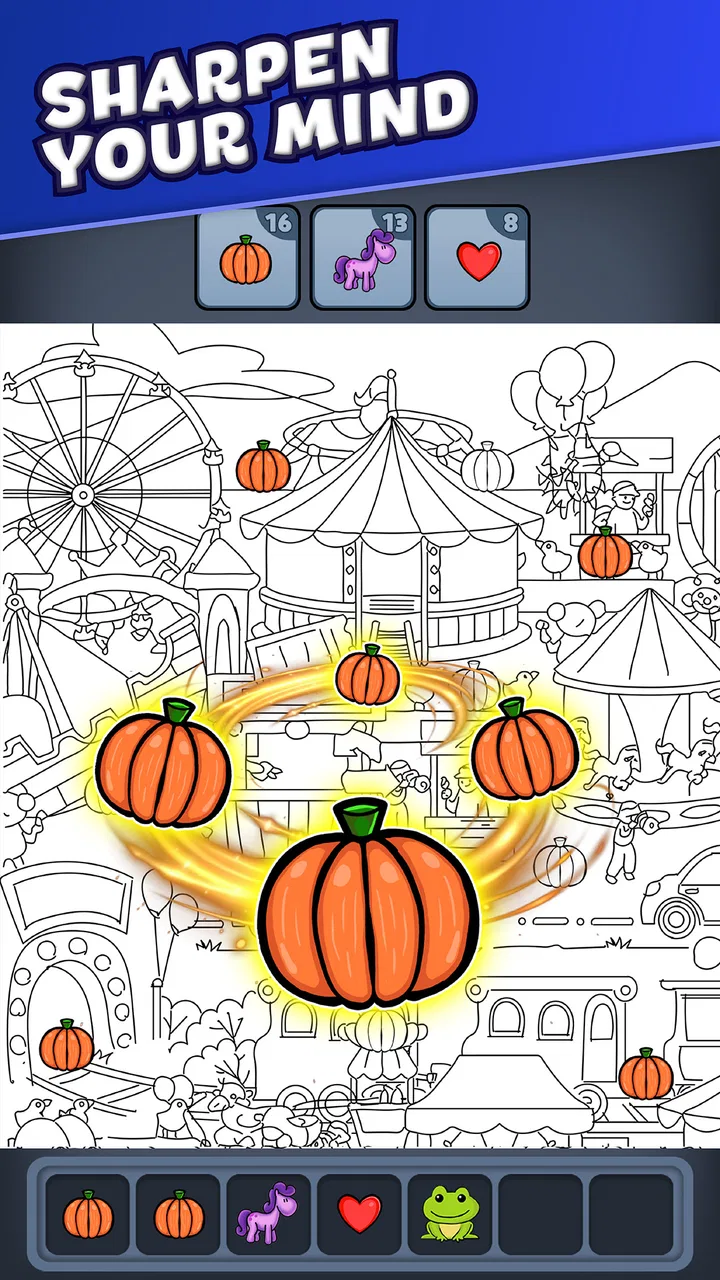
I spent time with Triple Match City as a relaxing but surprisingly demanding puzzle game, and my first impression was that it is easier to understand than it is to master. The basic task is simple: look through a busy scene, find matching objects, and clear groups of three. What makes the experience work is the constant tension between spotting the right item and deciding whether taking it now will help or leave the board awkwardly crowded later.
This is a free hidden-object matching game from Ferah Games, aimed at players who enjoy visual searches more than fast reflexes. It is listed for Everyone, so the presentation is approachable for a broad audience, while the later decision-making can still give adults something to think about. The game has passed one million installs and holds a 4.9 average from roughly twenty-two thousand ratings, which fits my experience: it is immediately accessible, polished enough for short sessions, and easy to return to when I have a few spare minutes.
How the current version feels to play
The central loop combines two familiar puzzle ideas without making either one too complicated. I scan a scene for objects, select matching pieces, and try to build sets of three. The hidden-object layer rewards patience and visual attention, while the triple-matching layer forces me to manage space and timing. Finding an object is only half the job; choosing when to use it is where the puzzle becomes interesting.
You May Also Like

 Blood Strike: 2.5 Anniversary
Blood Strike’s Loadouts Turn Every Drop Into a Tactical Gamble
A close look at Blood Strike’s custom loadouts: how fast access to signature weapons reshapes its battle royale rhythm, rewards preparation, and narrows the gap between fights.

 Pandora - Music & Podcasts
Pandora’s Music Is Easy to Start, but Harder to Recover
Pandora’s strength is its low-effort path from a seed to a station. Its weak spot is how much confidence it asks you to place in connection, setup, and quiet recovery.

 8 Ball Pool
 Is Built on Rivalries, Rematches, and Routine
A close look at the rivalries, rematches, shared routines, and unanswered safety questions that turn a quick pool match into a persistent mobile community.

 Samsung Music
’s Quiet Strength Is Playing What You Already Own
Its reach comes less from spectacle than from dependable access to a personal library. That simplicity is both the app’s strongest retention engine and its ceiling.

 AccuWeather: Weather Radar
AccuWeather Review: A Quick, Clear Forecast for Everyday Decisions
For everyday plans, the best forecast is the one you can understand quickly. AccuWeather makes rain timing, radar, and local conditions easy to act on, with a few trade-offs.

 Hill Climb Racing
Why Hill Climb Racing Still Turns Crashes Into One More Run
A tiny car, a bumpy hill and one more upgrade: Hill Climb Racing keeps resurfacing because its simple chaos makes every near-miss feel personal.
More From Our News Desk



That distinction matters because a careless tap can make the next few moves harder. When several similar objects are visible, I have to decide whether to complete a set immediately or hold a piece while I search for a better sequence. I found myself switching between broad observation and small tactical choices. First I look at the whole scene, then I focus on the objects that can form a complete group, and finally I check whether removing them will expose or obstruct useful options.
The game suits a relaxed posture. I do not need the rapid reactions expected by arcade puzzles, and I can approach each board at my own pace. At the same time, it is not simply a passive search exercise. The matching rule gives every discovery a consequence, especially when the visible objects are similar in color or shape. I enjoyed that middle ground: calm enough for a break, but active enough to keep my attention from drifting.
The best way to play is to scan before tapping. I now spend a few seconds identifying possible sets rather than grabbing the first familiar object I notice. That small habit reduces impulsive moves and makes the board feel much more manageable. It also reveals one of the game’s strengths: the challenge comes less from speed and more from organizing what I can see.
A practical routine for difficult boards
When a scene looks crowded, I divide it mentally into areas instead of searching randomly. I check one corner, then the center, then the remaining edges. This is more useful than repeatedly sweeping across the entire screen because it lowers the chance of overlooking a small object hidden among larger ones. Once I find two matching pieces, I do not automatically select them. I first look for the third and consider whether another set should be completed first.
That approach is especially helpful during a short everyday session. If I am waiting for an appointment or taking a break between tasks, I can play one board without needing to learn a complicated control scheme. If I am tired, I can concentrate on recognition rather than planning a long chain of moves. If I am in a more focused mood, I can treat the same scene as a small exercise in visual memory and sequencing.
Another useful habit is to avoid tunnel vision. The most obvious object is not always the most important one. A large item may be easy to find but may not improve the board, while a smaller matching piece can complete a set and open a cleaner search. I found that looking for the third match before committing to the first two made my play more deliberate and reduced the feeling that I was simply tapping through clutter.
What Ferah Games has established so far
The game was released on June 29, 2022, and the current version is 2.14.0. That gives the product a useful sense of maturity. I am not approaching it as an experimental first release; I am using a puzzle that has had time to settle into its visual-search and triple-match identity. The version information is also helpful for existing players because it shows that the game has continued beyond its launch state, even though I would not treat a version number alone as proof that every personal annoyance has been solved.
For someone discovering it now, the important point is that the current experience feels focused rather than overloaded. The basic rules are visible quickly, and the game does not require a long tutorial before the first meaningful decision. That makes it easier to recommend to a friend who wants a straightforward puzzle rather than a large, story-heavy mobile game.
The developer, Ferah Games, has chosen a format that depends on repetition done well. Each board asks me to repeat the same broad actions, but the visual arrangement changes the mental work. That can be satisfying when I want a familiar ritual with small variations. It can also become predictable if I am looking for dramatic progression, character development, or a deep strategic system.
The free entry point is a clear advantage. I can try the core loop without paying first, which is exactly what I want from a casual puzzle recommendation. However, the game includes in-app purchases ranging from $1.99 to $99.99 per item. That range is worth keeping in mind before handing the game to a child or treating it as a completely cost-free activity. The age rating is Everyone, but an age-friendly presentation does not remove the need for sensible purchase controls on a shared device.
How the evolution affects returning players
Existing users are likely to appreciate the stability of a game that still knows what it wants to be. The current build does not need to reinvent the matching formula to remain enjoyable. Its value comes from making the search-and-group loop easy to revisit. If I already liked the original idea, the ongoing version history suggests a product that has remained active rather than being abandoned after launch.
At the same time, returning players should judge the current version by how it fits their habits, not simply by the fact that it carries a later number. If I want a gentle daily puzzle, the established format works well. If I am hoping for a completely different mode or a major shift in depth, I should keep expectations modest. The strongest part of the experience remains the board-by-board search and matching, so that is where I would place my expectations.
I also noticed that familiarity changes the way I play. New players may spend their attention learning the visual language of the scenes, while returning players can concentrate on efficiency. I start recognizing which areas deserve a closer look and which obvious objects can safely wait. That creates a modest skill curve without requiring formal strategy guides. The improvement comes from observation, not from memorizing a complicated ruleset.
One trade-off is that the game’s relaxing pace can make mistakes feel more frustrating than expected. Because I am not rushing, I feel that a poor choice was avoidable. A missed match or crowded sequence can therefore interrupt the calm mood. My solution is to treat failed attempts as information: I review which object I selected too early and restart my search with a better order. Players who dislike repeating a puzzle after a mistake may find that process less appealing.
Where it stands beside other puzzle choices
Compared with a traditional hidden-object game, this one gives each discovery more immediate purpose. In a pure visual-search title, I can often find items one by one and move on. Here, I am constantly relating objects to groups of three, so the search has a planning layer. That makes it more engaging for me when I want something beyond a simple checklist.
Compared with a conventional match-three game, the emphasis is different. I am not mainly arranging tiles or building chains through quick board manipulation. I am examining a scene and selecting objects based on recognition. Players who enjoy colorful grids and rapid combinations may prefer a classic match-three format, while people who like spotting details in a cluttered image may find this approach more natural.
It also differs from a large-scale brain-training app. Triple Match City does not need to be treated like a formal test of memory or concentration. I see it as entertainment first, with useful side effects for attention and visual sorting. That distinction is important: I would recommend it for a relaxing mental challenge, not as a substitute for a structured learning tool.
The game is a particularly good fit for people who like short, repeatable sessions, visual puzzles, and rules that can be understood quickly. It is less suitable for anyone seeking a strong narrative, complex long-term planning, competitive multiplayer, or a puzzle system that changes dramatically from one play session to the next. Those players may be happier with a story-driven adventure puzzle or a deeper strategy game.
Small frictions that shape the experience
The main limitation is repetition. The hidden-object matching loop is clear and pleasant, but it is also the entire identity of the game. After several sessions, I need to be in the right mood for another round of searching and grouping. The simplicity that makes it welcoming can also make it feel narrow beside games with multiple modes or richer progression.
Visual clutter is another double-edged feature. It creates the challenge, but it can also make a board tiring when objects blend into one another. I play more comfortably when my screen is clean and my attention is not divided. On a small phone display, careful scanning may feel less convenient than on a larger screen, especially for players who find tiny details difficult to distinguish.
The purchase range is the other point I would mention honestly to a friend. Free access lowers the barrier to trying the game, but the presence of relatively expensive individual purchase options means I would check device settings before letting a child play unsupervised. I do not see that as a reason to reject the game outright; it is simply part of using a free-to-start mobile title responsibly.
There is also a difference between relaxing and mindless. I can play while unwinding, but I cannot give the game no attention at all. If I am watching a show closely, chatting, or trying to work, I make more mistakes because the visual search needs genuine concentration. For multitasking, an idle game would be a better choice. For a focused five-minute break, this one is more rewarding.
What I would watch as the game continues
With version 2.14.0 now representing the current build, I would be most interested in how Ferah Games keeps the established loop fresh without making it complicated. New visual situations, better variety in object placement, and thoughtful ways to reward careful searching would matter more to me than unnecessary systems. The game does not need to become a different genre; it needs to preserve the clarity of its central puzzle while giving regular players reasons to return.
I would also watch how the balance between free play and purchases feels over longer use. The free starting point is important because it lets players decide whether the format suits them. For me, a good long-term experience would keep optional spending from overshadowing the satisfaction of solving a board. Anyone considering regular play should make that judgment from their own habits, particularly if they are prone to buying help when a puzzle becomes frustrating.
Another meaningful area is accessibility in practice. The Everyone rating makes the game broadly approachable, but visual-search games depend heavily on clear recognition. Players with vision difficulties, younger children, or anyone using a smaller phone may have a different experience from mine. I would recommend trying several scenes rather than assuming that a friendly age rating guarantees comfort for every player.
My final recommendation is fairly specific. I would suggest this game to a friend who enjoys hidden-object scenes, wants a free puzzle to pick up in short bursts, and likes making small decisions about when to complete a group. I would not suggest it to someone who needs a story, fast action, or a constantly changing set of mechanics. For the right player, the strongest reason to keep playing is the satisfying shift from spotting objects to understanding the order in which they should be used.
Overall, I found Triple Match City easy to enter but not entirely automatic to play. Its combination of visual searching and groups of three gives ordinary object hunting a more thoughtful rhythm. The free price makes trying it simple, the Everyone rating broadens its audience, and the strong response from players reflects how approachable the format is. The limitations are equally clear: repetition, visual fatigue, and the need to be mindful of in-app purchases. Even so, I would keep it installed for those moments when I want a calm, focused puzzle rather than a noisy or demanding game.
For Android users, the minimum operating-system requirement is Android 8.1, so owners of older devices should check compatibility before installing. If the device meets that requirement and the idea of matching found objects into groups appeals to you, this is an easy recommendation to test for yourself. I would begin with short sessions, use the scan-before-tapping routine, and decide after a few boards whether its steady pace fits the way I like to play.
FAQs for Triple Match City
01What is Triple Match City and how does it work?
Triple Match City is a mobile puzzle game where players match three or more identical items to clear them from the board. The game is set in a vibrant city environment with various levels, each presenting unique challenges and goals. Players progress through levels by achieving specific objectives, like clearing a certain number of items or reaching a score threshold.
02Is Triple Match City free to play?
Yes, Triple Match City is free to download and play on both Android and iOS devices. However, the game includes in-app purchases that allow players to buy power-ups, extra lives, or remove ads. These purchases can enhance the gaming experience but are not necessary to enjoy or complete the game.
03Does Triple Match City require an internet connection?
Triple Match City can be played offline, allowing players to enjoy the game without an internet connection. However, some features like leaderboards, daily rewards, and in-app purchases require an internet connection to access. Playing online also ensures that your progress is saved and synced across devices.
04Are there any ads in Triple Match City?
Yes, Triple Match City contains ads that may appear between levels or when accessing certain features. These ads are part of the free-to-play model. Players have the option to remove ads by making an in-app purchase, which can provide a smoother gaming experience without interruptions.
05Is Triple Match City suitable for children?
Triple Match City is designed for players of all ages, featuring colorful graphics and simple gameplay mechanics. However, parents should be aware of in-app purchases and ads. It's advisable to set up parental controls on the device to prevent unintended purchases and manage screen time effectively.
Pros
- Intuitive interface makes navigation easy.
- Engaging graphics enhance the gaming experience.
- Variety of levels keeps gameplay exciting.
- Smooth performance with minimal lag.
- Frequent updates add new content regularly.
Cons
- In-app purchases can become expensive.
- Requires internet connection to play.
- Advertisements can be intrusive at times.
- Limited offline features available.
- High battery consumption during gameplay.

Triple Match City
Gallery